What is calima?
Calima is fine desert dust floating in the air. When strong winds whip up dust in the Sahara and the wind then blows from the south, the dust is carried up over the Mediterranean and across Andalusia. Almuñécar is close to Africa, so the coast here is among the first places to notice it.
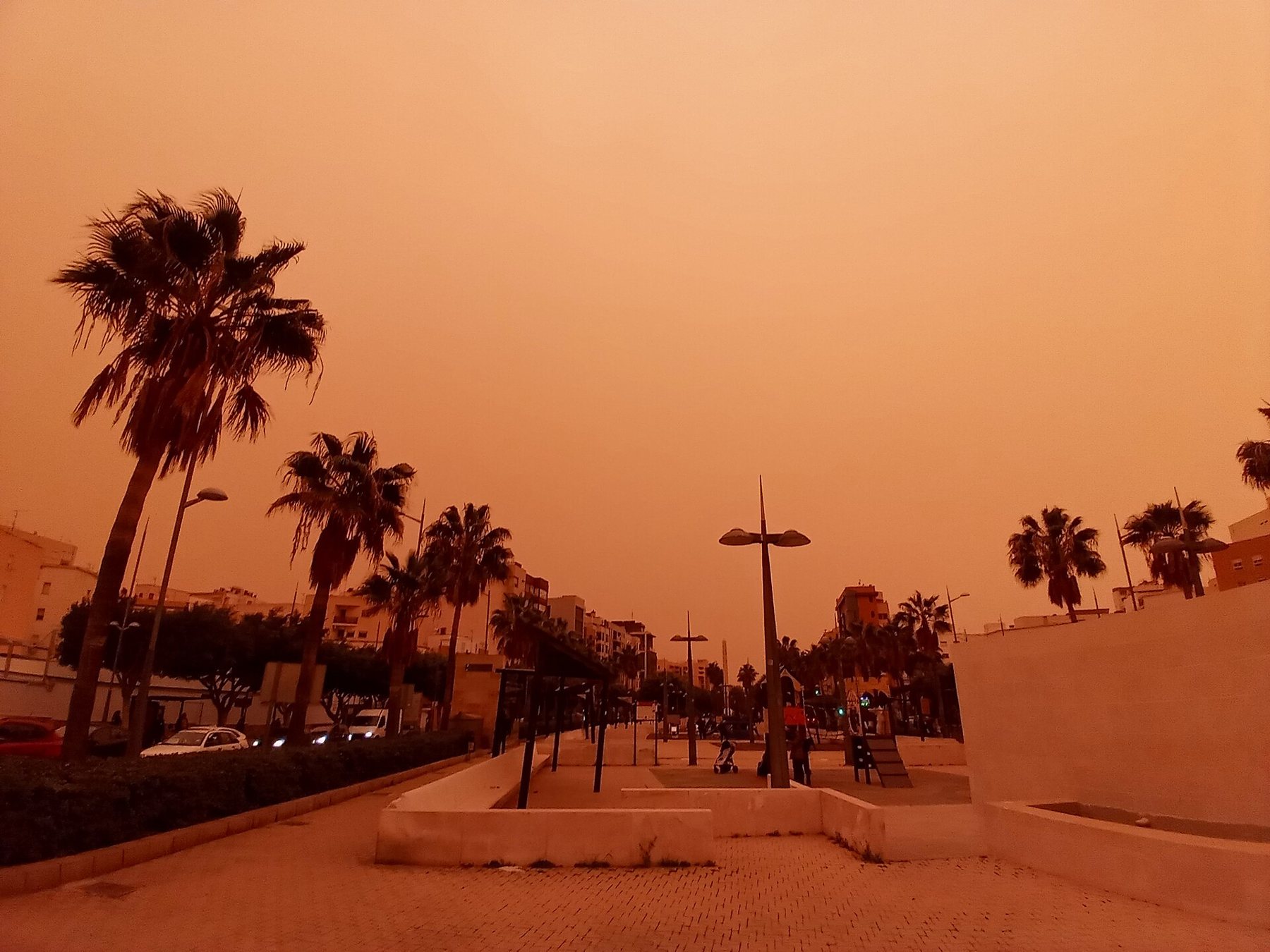
The air becomes hazy and yellowish-grey, the view disappears, and the temperature often changes significantly. During very heavy outbreaks, the sky can turn completely orange – as in Almería and Granada in March 2022, when Storm Celia sent large amounts of dust across southern Spain.

How often – and for how long?
Calima can arrive at any time of the year. An outbreak typically lasts from a few hours up to a week. After that, the sky begins to clear, and visibility gradually improves again.
Mud rain
If rain falls while the dust hangs in the air, the droplets bring the dust down with them. Spaniards call this lluvia de barro – mud rain. It is mostly a nuisance: Afterwards, cars, balconies, garden furniture, and facades are covered in a thin, orange film.

What is in the dust?
Calima consists mainly of minerals: aluminium silicates (aluminium oxide and silicon dioxide), clay, gypsum, and calcite. But the dust also brings other things along on the journey – bacteria, fungal spores, pollen, small organisms from the sea, and industrial pollution that it has passed along the way. Researchers have found many different kinds of bacteria in the dust, and the composition depends on where in Africa it comes from.
Can you get ill from calima?
For most people, calima is mostly unpleasant. It can cause red and itchy eyes, a stuffy nose, a sore throat, a cough, a headache, and a feeling of lacking energy. The dust dries out the respiratory tract.
If you are asthmatic, have COPD, allergies, or a heart condition, you must be extra careful. Spanish studies have shown increased hospital admissions among lung patients on days with heavy dust, and a study from the Canary Islands found a higher risk for heart patients.
Health authorities' advice
- Drink plenty of water.
- Stay indoors as much as possible when the dust is densest.
- Close doors and windows – including the balcony door.
- Avoid strenuous physical activity outdoors, e.g. running and long hikes.
- Use an FFP2 mask if you must go out when the dust is dense – especially if you have respiratory problems.
- Take your medication for asthma and allergies as prescribed, and have it with you.

Good advice at Playa Tropical
- Close the balcony door and bring cushions and towels inside from the balcony.
- Wait to wash the car and balcony until the dust has settled – otherwise you will have to do it twice.
- Rinse the mud rain off the car with plenty of water before drying it. The dust is fine sand and can scratch the paintwork.
- Don't take the long walk in the mountains on a calima day. Save it for the day after, when the air is clear again.
See also Climate – why it is called Costa Tropical and The right seasons.
Sources
- Público: Por qué llueve barro
- The Objective: Borrasca Celia and the mud rain of March 2022
- El Debate: La calima se extiende por la mayor parte de España (CSIC on dust composition and health)
- La Voz de Ibiza: Cómo afecta la calima a la salud
- El Salto: La calima, un riesgo para la salud
- AEMET – Spain's Meteorological State Agency (forecasts and alerts)
- Photos from Wikimedia Commons – photographer and license listed under each image